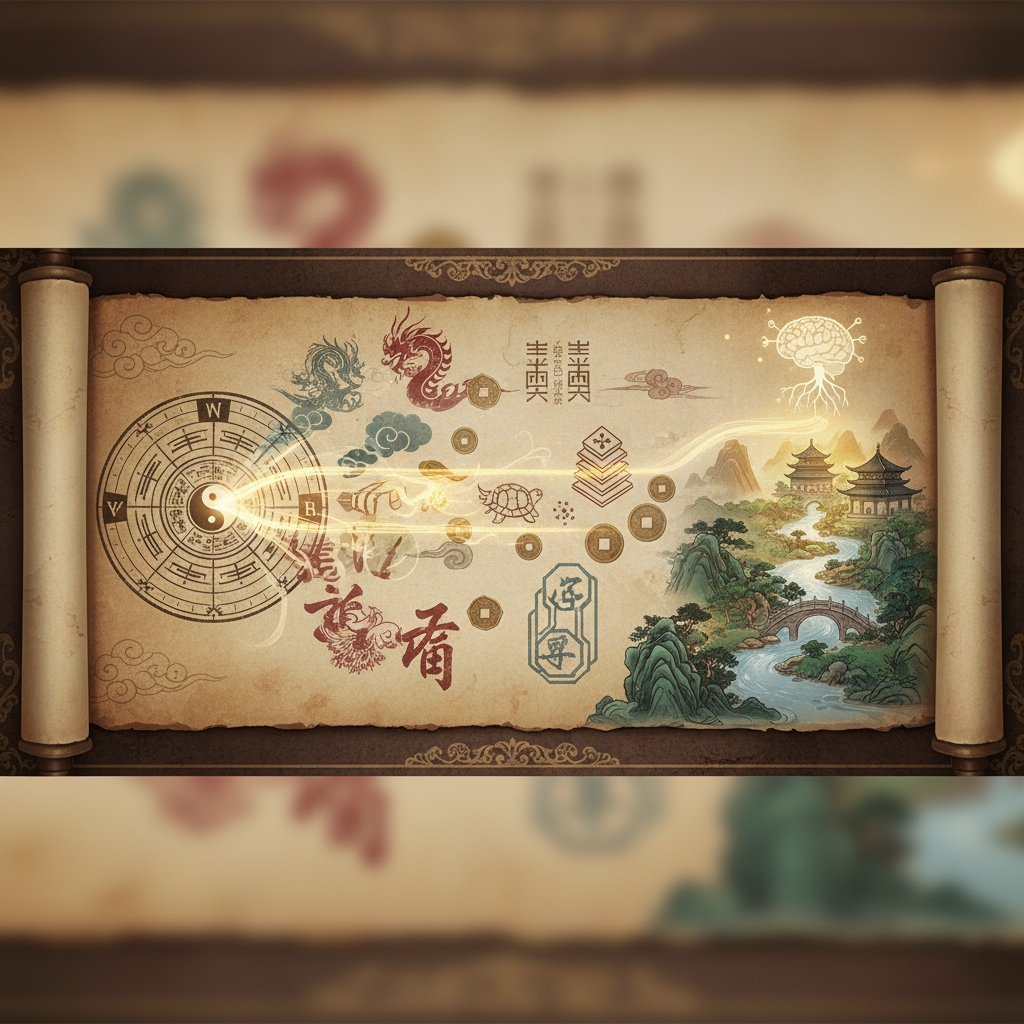
Understanding Feng Shui: The Art of Placement
Feng Shui, an ancient practice rooted in Chinese metaphysics, translates to "wind and water." It embodies the belief that the arrangement of our environments can affect our energy, or "qi," flow, shaping our lives positively or negatively. Originating over 3,000 years ago, Feng Shui emerged from a desire to harmonize humans with the natural world. Its principles stem from observing how environmental factors—topography, climate, and celestial alignments—impact human existence.
Historically, Feng Shui was essential for site selection of homes, graves, and cities, being crucial in ensuring prosperity and well-being. Practices evolved from the ancient Chinese understanding of yin and yang, the Five Elements theory (wood, fire, earth, metal, and water), and the Bagua map, which identifies energies linked to specific life areas. By understanding these connections, practitioners could improve their fortune and balance their surroundings.
The I Ching: The Book of Changes
The I Ching, or "Book of Changes," is one of the oldest Chinese classical texts and holds a foundational position in Chinese culture and philosophy. Dating back to the Western Zhou period (1046-771 BC), it serves as both a divination tool and a philosophical guide. The I Ching comprises 64 hexagrams, each representing a particular natural state or process. Users can consult the I Ching to gain insights into their lives and decision-making by casting coins or yarrow sticks to obtain relevant hexagrams.
The wisdom embedded within the I Ching lies in its emphasis on change and the cyclical nature of life. It teaches that through understanding the transitions and dualities in life, individuals can navigate challenges more adeptly. In Feng Shui, the I Ching enriches practitioners' comprehension by offering deeper philosophical insights that can help align their environments to better serve their intentions.
Geomancy: The Divination Practice of Earth
Geomancy, another ancient practice within the realm of Chinese metaphysics, focuses on interpreting patterns generated from earth-based readings. In essence, this form of divination uses the earth's elements—often represented as dots in sand or soil— to derive meaning about the human experience. The term geomancy literally translates to “divination by earth,” and like Feng Shui and I Ching, it emphasizes connection with the natural world.
Historically, geomancy played a significant role in traditional Chinese medicine, agriculture, and architecture. By discerning patterns indicative of environmental energies, geomancers provided insights that guided practitioners to make informed decisions, whether in selecting auspicious sites for farming or constructing buildings. This ancient art shares an intertwined relationship with the principles of Feng Shui, where both practices seek to cultivate harmony with the surrounding world.
The Cultural Significance of Feng Shui and I Ching in Modern Life
In contemporary society, the principles of Feng Shui and I Ching find applications in diverse settings—from designing homes and workplaces to enhancing personal well-being. As urbanization increases and individuals spend more time in structured environments, awareness of the profound effects of space on health and emotional states has rekindled interest in these ancient practices.
The cultural significance of Feng Shui and I Ching extends beyond personal well-being, influencing broader societal approaches to sustainability and harmony with nature. Its integration into contemporary design reflects a collective yearning for balance and growth amidst the challenges posed by modern life. This philosophy encourages individuals to create spaces that foster creativity, productivity, and peace, nurturing not only the body but also the spirit.
Practical Applications: Integrating Feng Shui and I Ching in Daily Life
Incorporating the concepts of Feng Shui and I Ching into daily living can yield profound changes. Here are a few simple ways to begin:
-
Assess Your Space: Begin with a room that feels stagnant or stressful. Use the Bagua map to identify areas of strength and weaknesses, and rearrange furniture or decor to promote better energy flow.
-
Consult the I Ching: When facing difficult decisions or transitions, consult the I Ching by performing a simple coin toss or using yarrow sticks. Reflect on the hexagram and its guidance to gain clarity on your situation.
-
Embrace Nature: Integrate real plants, natural light, and even flowing water into your space to enhance vitality and connect with the surrounding environment.
-
Mindful Reflection: Set aside time for introspection, utilizing the I Ching's teachings on change and adaptability to cultivate personal growth.
By merging the age-old wisdom of Feng Shui and I Ching with modern sensibilities, anyone can embark on a transformative journey towards a more harmonious existence. This engaging interplay between ancient tradition and contemporary life continues to inspire seekers of balance and insight.