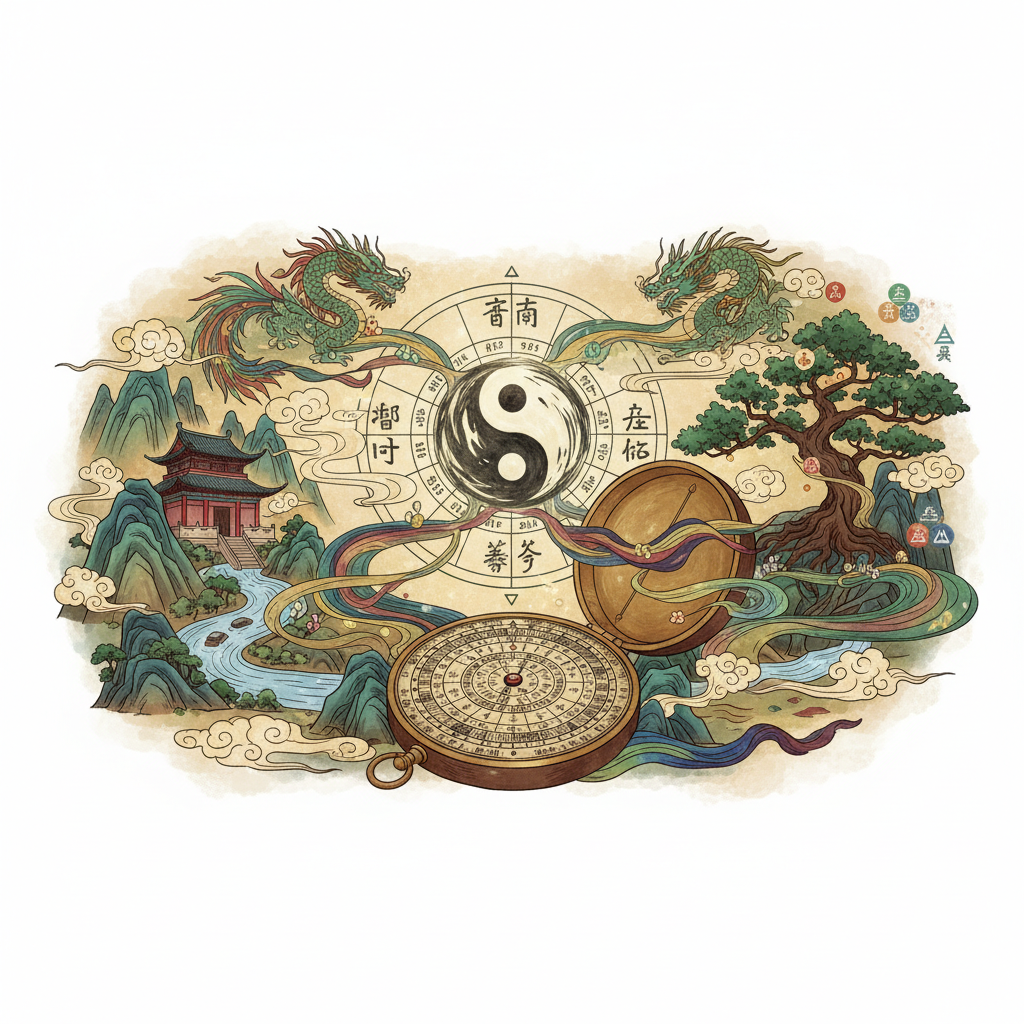
Introduction to Chinese Metaphysics and Its Divinatory Arts
Chinese metaphysics encompasses a rich tapestry of philosophical and scientific traditions aimed at understanding the natural world and human destiny. Among its most influential branches are Feng Shui, I Ching, geomancy, and divination systems such as Bazi. These disciplines have matured over millennia and continue to play a pivotal role in Chinese culture and beyond, offering guidance on everything from personal fortune to architectural harmony.
The Historical Roots and Significance of Feng Shui
Feng Shui, literally translated as “wind-water,” originated over 3,000 years ago during the Zhou Dynasty. Initially practical in nature, it focused on harmonizing human dwellings with natural forces—wind and water being metaphors for qi (energy) flow. Over time, Feng Shui evolved into a comprehensive system of spatial orientation, using principles derived from Yin-Yang and the Five Elements (Wood, Fire, Earth, Metal, Water). Its cultural significance is profound; ancient Chinese emperors consulted Feng Shui masters when selecting burial sites and capitals, believing alignment with cosmic energies could influence wealth, health, and fortune.
I Ching: The Classic of Change in Chinese Divination
The I Ching, or Book of Changes, is one of the oldest Chinese classical texts, dating back to at least 1000 BCE. It comprises 64 hexagrams—combinations of six broken or unbroken lines—each symbolizing different states and transitions. I Ching functions as a divination manual and philosophical treatise, interpreting the dynamic interplay of Yin and Yang forces. Its use in Chinese metaphysics extends to decision-making and understanding fate, often consulted alongside Bazi charts to provide context or verify insights about a person’s life path.
Bazi: The Four Pillars of Destiny
Bazi (literally “Eight Characters”) is a personalized divination system based on an individual’s birth data—year, month, day, and hour—each represented by a Heavenly Stem and Earthly Branch, elements drawn from Yin-Yang and the Five Elements theory. These eight characters form the Four Pillars, revealing the inflow of energies that shape personality, relationships, health, and destiny. Unlike Feng Shui, which focuses on environment, Bazi focuses internally, analyzing intrinsic life patterns. Its integration with Feng Shui and I Ching provides a comprehensive toolkit for understanding both external and internal forces influencing life outcomes.
Geomancy and Its Role in Harmonizing Energy
Geomancy, a practice widespread in many cultures, in Chinese tradition overlaps heavily with Feng Shui. It concerns reading the landscape and spatial energies to influence wellbeing and fortune. Chinese geomancy emphasizes form, orientation, and landscape influence on qi flow. This practice extends beyond buildings to include entire cities, gravesites (feng shui of tombs is called Yin Feng Shui), and even furniture arrangement. Proper geomantic reading ensures positive energy accumulation while mitigating negative influences, thereby improving physical health and prosperity.
The Interconnection of Divination Systems in Chinese Metaphysics
Chinese metaphysical disciplines are interconnected rather than isolated. Feng Shui, I Ching, Bazi, and geomancy each address different dimensions of existence but share foundational philosophies based on Yin-Yang, Five Elements, and the flow of qi. For example, a Feng Shui practitioner may use Bazi charts to tailor spatial adjustments for an individual’s specific elemental needs. Similarly, I Ching lines may inform timing decisions in conjunction with the Four Pillars. This holistic approach enriches each system, allowing for precise, personalized guidance respected for centuries.
Cultural Impact and Modern Relevance
In modern times, these ancient systems have transcended Chinese cultural borders, influencing global practices in architecture, wellness, and personal development. Feng Shui consultants are sought worldwide, and Bazi readings influence business and personal decisions. Importantly, contemporary scholars and practitioners strive to maintain academic rigor while adapting metaphysical practices to modern contexts, emphasizing their role not as superstition but as symbolic frameworks with psychological and environmental benefits.
Conclusion
Feng Shui, I Ching, Bazi, and geomancy constitute fundamental pillars of Chinese metaphysics, offering intricate systems for interpreting and harmonizing human existence with cosmic laws. Their historical depth and cultural resonance establish them as enduring tools for divination and practical wisdom. Integrating these traditions continues to provide invaluable insights that bridge ancient philosophy and contemporary applications in personal and environmental harmony.