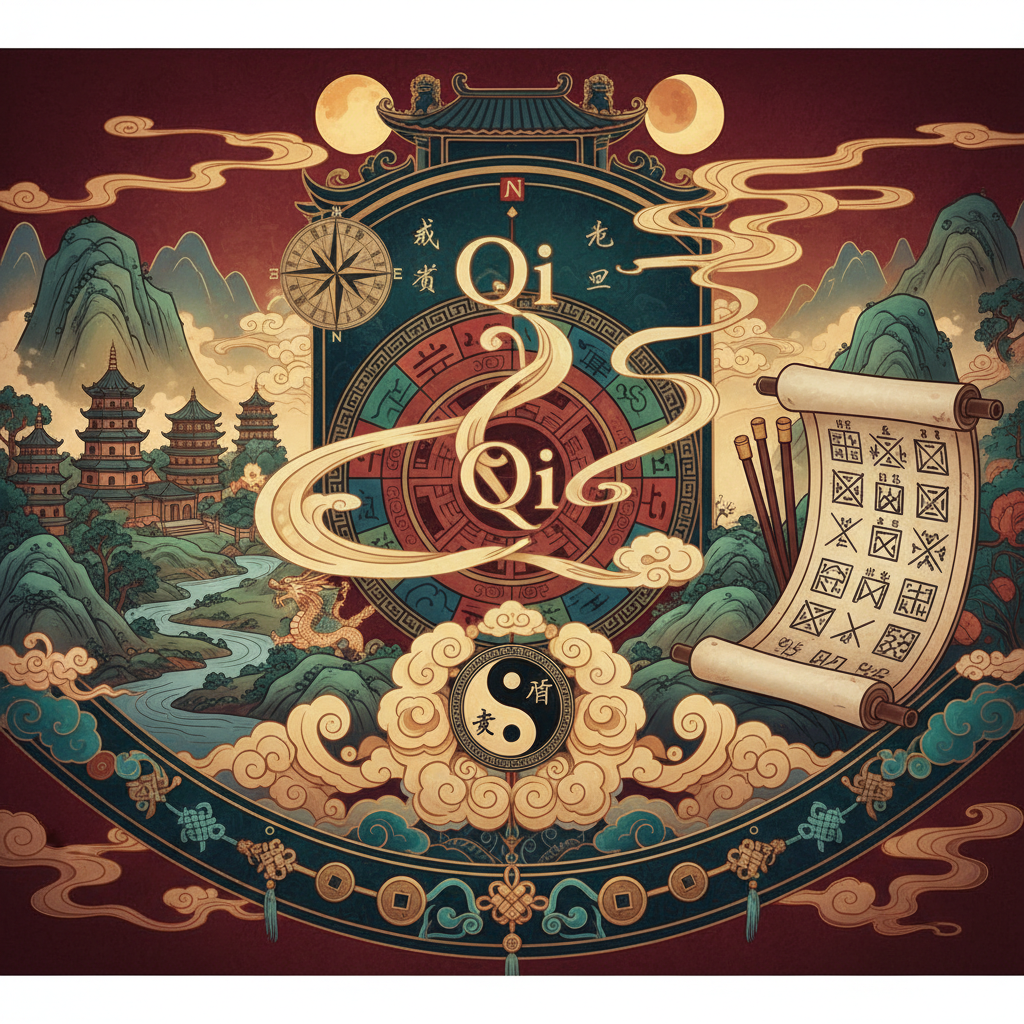
The Roots of Feng Shui: An Ancient Practice
Feng Shui, translating to "wind" and "water," is a holistic system originating from ancient China, primarily concerned with spatial orientation and its influence on human well-being. Its foundations are steeped in over 3,000 years of history, where the inherent connection between nature and human life was first recognized. Initially used to ensure that homes were built in auspicious locations based on the Earth’s energies, it has evolved into a comprehensive method to enhance various aspects of life, including health, fortune, and relationships.
Historically, practitioners observed how geographical elements interacted with human settlements, leading to practices that sought to promote harmony with the environment. The knowledge was meticulously passed down through generations and became integral not just for building homes but also for city planning, thus framing the cultural landscape of China.
The I Ching: The Oracle of Change
Complementary to Feng Shui is the I Ching, or the Book of Changes, an ancient Chinese divination text considered one of the foundational works of Chinese philosophy. With roots in the Western Zhou period (c. 1046–771 BC), this text elucidates the principles of change, offering insights into life's cycles and the dynamics of yin and yang.
The I Ching consists of 64 hexagrams, formed by an arrangement of solid and broken lines representing yin (feminine, passive) and yang (masculine, active) energies. When consulting the I Ching, one typically employs a method of casting coins or yarrow stalks to produce a hexagram reflective of a particular question or situation. This hexagram, along with its associated commentary, provides guidance and advice, thus illustrating the interconnectedness of fate and free will.
The I Ching’s emphasis on change and transformation resonates profoundly within the realms of Feng Shui and geomancy, reinforcing the concept that understanding one's environment can lead to a more harmonious existence.
Geomancy: The Art of Earth Divination
Geomancy, or “divination by earth,” is another ancient practice associated with Chinese metaphysics that focuses on interpreting the patterns and symbols created in soil or sand to predict future events. This technique, although more prevalent in Western cultures, has its parallels in the Chinese tradition.
In Chinese geomancy, also known as "Tsu Po," practitioners assess the landscape, geological features, and the dimensionality of landforms to derive meaning. These influences help inform decisions about land use and can guide everything from urban development to individual home site selection.
The significance of geomantic readings extends beyond divination; it holds historical importance as it relates to how ancient civilizations aligned their structures in accordance with the natural world. The Chinese believed that every landscape has its own spirit or energy, and understanding these forces could lead to auspicious outcomes, hence intertwining geomancy with Feng Shui principles effectively.
The Cultural Significance of Chinese Metaphysics
Chinese metaphysics embodies a synthesis of various traditional elements, including astrology, numerology, and divination systems like Feng Shui and the I Ching. These practices serve not just as practical guideposts for individual lives but also as collective frameworks informing societal beliefs.
In essence, the teachings of Feng Shui and the I Ching have deeply influenced aspects of culture, art, and architecture in Asia and have gradually made their way into the global consciousness. The cultural significance lies in their powerful ability to create meaning and purpose in life, advocating for a harmony that connects human existence with the cosmos and the environment.
Everyday Applications of Feng Shui and I Ching
Today, Feng Shui and I Ching are not just historical artifacts; they are living practices. Many individuals incorporate these principles into their daily lives, whether through home décor, office setups, or personal well-being routines. For example, the strategic placement of furniture in homes can create a sense of balance and tranquility, while I Ching consultations can provide clarity and insight in decision-making processes.
As these ancient practices continue to adapt to modern living, they provide comfort and guidance, inviting people to reflect on their surroundings and the energies they harness. This global resurgence speaks to an enduring human desire for connectivity, balance, and harmony across all facets of life.
Conclusion: A Journey Toward Harmony
Feng Shui, I Ching, and geomancy reflect a rich tapestry of Chinese metaphysical thought that has transcended historical and cultural boundaries. They invite us to explore our relationship with our environment and the universe, emphasizing that wisdom rooted in nature is timeless. As we navigate our complex lives, integrating these ancient teachings can lead us back to balance and harmony, enriching our contemporary existence. Through understanding the past, we can shape a harmonious future grounded in the invaluable lessons of our ancestors.