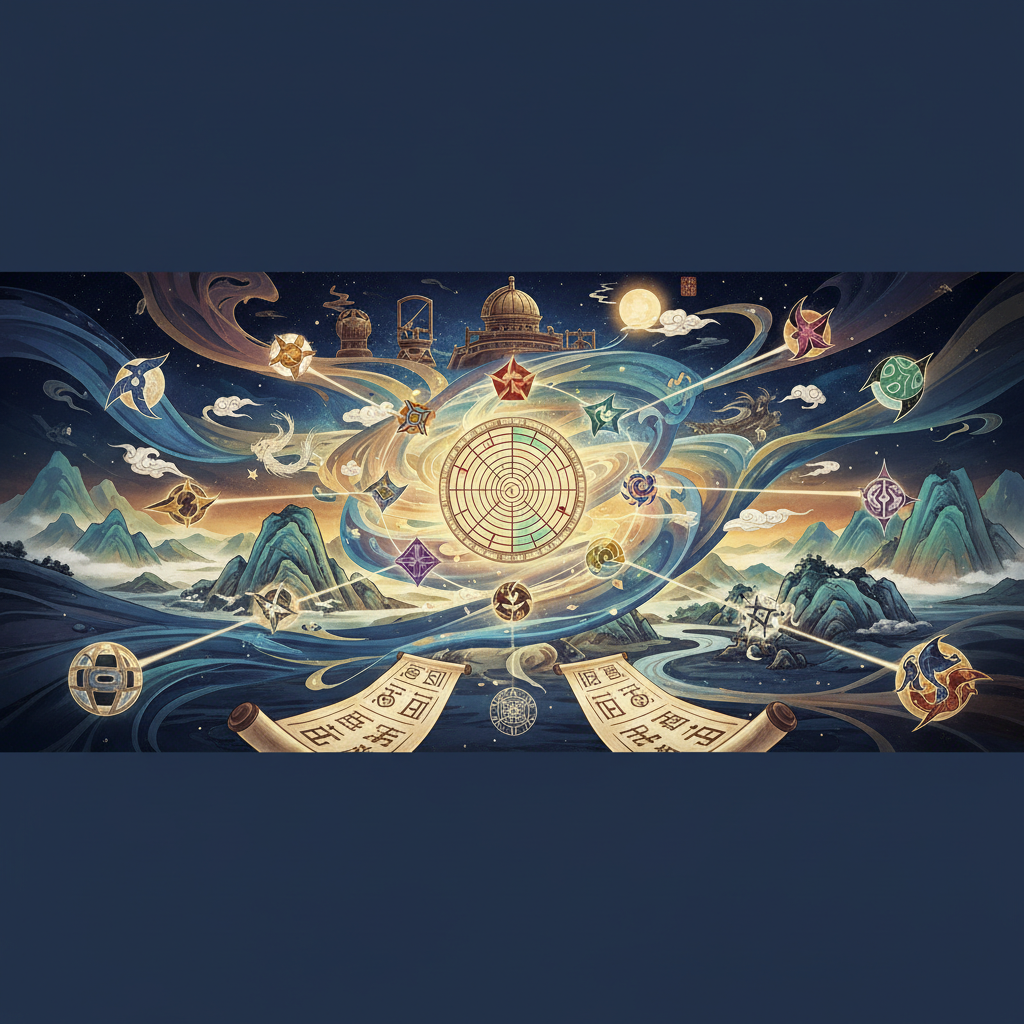
Understanding the Foundations of Flying Stars in Feng Shui
Feng Shui is an ancient Chinese practice that seeks to harmonize individuals with their surrounding environment. At its core, this art incorporates the principles of I Ching (the Book of Changes), Chinese metaphysics, geomancy, and divination. Among the myriad concepts within Feng Shui, the "Flying Stars" system stands out as a powerful mechanism for analyzing the energy patterns of any space.
Flying Stars is a method that combines time (Chinese calendar) and space (the physical layout of a house or an environment) to assess the flow of Qi (or life energy). This dynamic system assigns energies to different numbers, which shift annually and monthly, creating a potent matrix that we can tap into for personal and environmental growth.
A Brief Historical Context
The origins of Feng Shui date back over 3,000 years, rooted in ancient Chinese philosophies and cosmology. Its earliest practices are intertwined with funerary rites, where the positioning of graves was carefully considered to enhance the deceased's spirits' journey into the afterlife.
The concept of Flying Stars emerged significantly during the Tang Dynasty (618–907 AD). The I Ching, a fundamental text that serves as the cornerstone of Chinese cosmology, played a vital role in shaping the principles of Flying Stars. As time progressed, skilled practitioners began correlating the stars’ positions in the sky with terrestrial landscapes, ultimately giving rise to geomantic practices.
The Cultural Significance of the Flying Stars System
The Flying Stars system relies on the idea of Nine Stars, where each star represents a unique energy type. This categorization encompasses various aspects of life, including wealth, health, relationships, and personal growth. The intricate association with the cosmic cycles resonates deeply with Chinese philosophy, emphasizing the interconnectedness of all things.
Culturally, the Flying Stars system provides guidance, assisting individuals in making informed decisions regarding their environments. It showcases the profound understanding of time cycles and their effects on daily living.
Deciphering the I Ching Connection
The I Ching is pivotal to Feng Shui, offering insights into change and the flow of time. It consists of 64 hexagrams derived from a combination of six lines that can be either broken (yin) or unbroken (yang). Each hexagram provides intuitive wisdom on navigating life’s complexities.
In Feng Shui, the transformations indicated by the I Ching relate directly to the Flying Stars. Understanding this connection allows practitioners to utilize various tools, from auspicious dates to physical adjustments in their spaces, maximizing positive outcomes.
Navigating Geomancy and Divination Practices
Geomancy, or divination through earth, plays a crucial role within the spectrum of Flying Stars and Feng Shui. Practitioners often employ geomantic techniques to assess energy patterns in a specific location, which informs the application of the Flying Stars system.
Divination practices, integral to understanding the undercurrents of energy, may include methods like interpreting the I Ching or using traditional geomantic tools such as sticks or coins. These practices enhance the practitioner's ability to make astute adjustments in their environments, fostering prosperity and harmony.
Practical Applications of Flying Stars in Daily Life
While the theoretical understanding of Flying Stars is significant, its practical application transforms lives. Each year and month, Flying Stars shift, meaning that regular seasonal assessments are vital. Incorporating these insights can inform decisions about home layout, decor, and energy management, paving the way for achieving balance.
Engaging with Flying Stars also invites intentionality into daily living. By aligning spaces with beneficial energies, individuals can work towards health, happiness, and resolution of life's challenges. Strategies may include rearranging furniture to optimize Qi flow, adding elements that correspond with auspicious stars, or utilizing color schemes associated with specific energies.
In conclusion, understanding and implementing the Flying Stars method in Feng Shui, underscored by the wisdom of the I Ching and supported by geomantic practices, opens pathways to greater balance and well-being. As you explore this rich tapestry of Chinese metaphysics, consider it not just as a practice but as a lifestyle invitation to harmonize with the world around you.