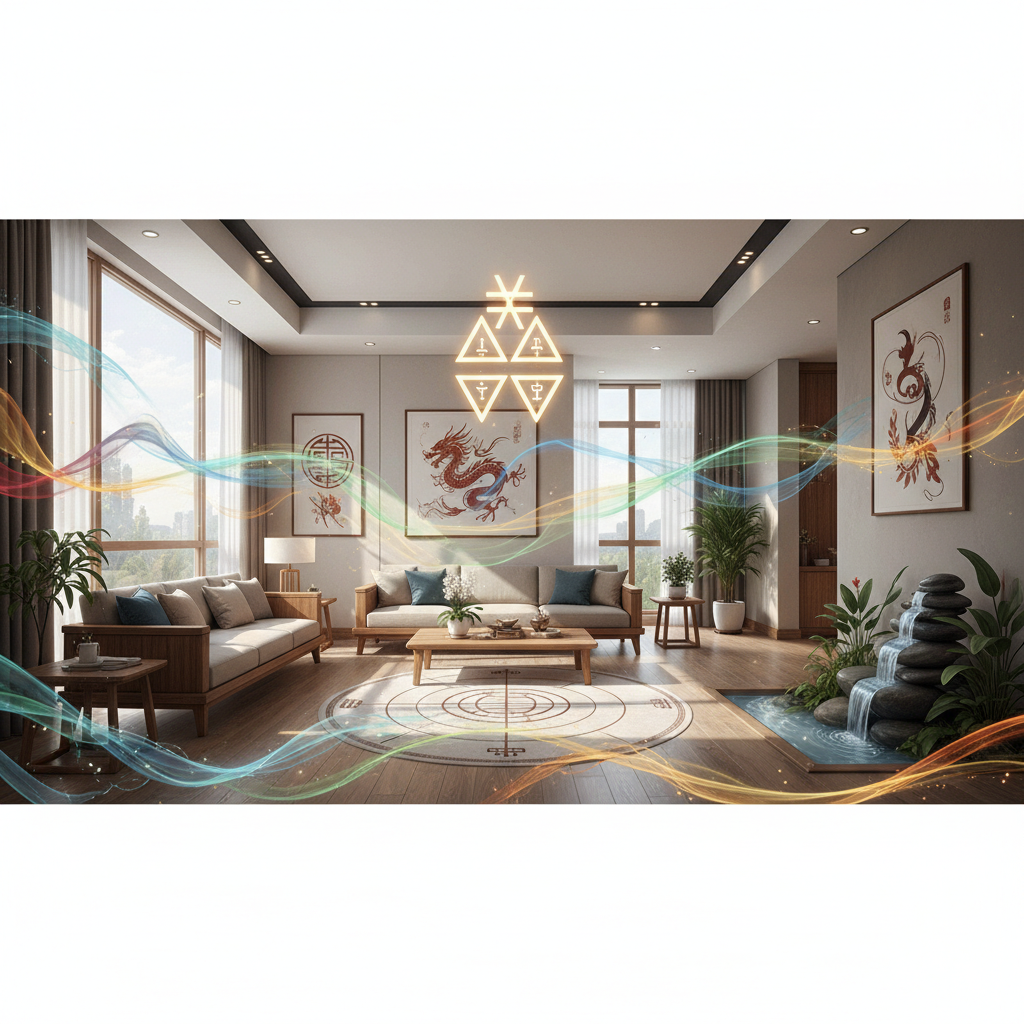
Introduction to Feng Shui and Chinese Metaphysics in the Home
In the realm of ancient Chinese wisdom, Feng Shui, I Ching, and Chinese metaphysics stand as interconnected practices that offer profound insights into harmonizing living environments. These traditions, deeply rooted in history and culture, continue to inspire homeowners worldwide striving to bring balance, positive energy, and clarity into their homes. This article explores the historical context, cultural significance, and practical applications of Feng Shui, I Ching, Chinese metaphysics, geomancy, and divination within the domestic space.
Historical Origins and Cultural Context
Feng Shui, which translates to “wind” (feng) and “water” (shui), dates back over 3,000 years and originally emerged as a method for orienting tombs and buildings to achieve harmony with natural forces. This system is closely linked with Daoism and the cosmological principles of Yin and Yang and the Five Elements (Wood, Fire, Earth, Metal, Water). The goal was to align human dwellings with Qi (vital energy) to promote health, prosperity, and spiritual well-being.
I Ching, or the "Book of Changes," is an ancient text that predates Feng Shui and serves as a foundational work of Chinese metaphysics. Used primarily for divination, it combines symbolic hexagrams that represent dynamic forces and cycles of change. Chinese metaphysics combines these tools along with astrology, numerology, and geomantic practices to understand the relationship between humans and the cosmos.
Geomancy, a divinatory art integrating landforms and spatial orientation, has long paralleled Feng Shui's principles but with a more explicit focus on interpreting the earthly environment. Together, these systems offer a comprehensive approach to reading and influencing the subtle energies within a home.
The Principles of Feng Shui: Harmonizing Qi in Your Living Space
At the heart of Feng Shui are the principles aimed at facilitating the smooth flow of Qi to balance energy in a home. Practitioners use compass directions (Luopan), spatial layouts, and symbolism to design or adjust interiors and exteriors, ensuring that energy does not stagnate or become overwhelming. Furniture placement, choice of colors, and integration of natural elements like water or plants are practical aspects of Feng Shui application.
For example, the entrance of a home holds special significance, as it is considered the “mouth of Qi,” where energy enters. Ensuring this area is clear and inviting supports well-being. Additionally, the use of mirrors, lighting, and specific shapes can activate or calm different energy zones, influencing emotions and productivity.
I Ching and Its Role in Home Guidance and Divination
Beyond Feng Shui’s spatial focus, the I Ching offers a philosophical and interactive system to guide decision-making for personal and home matters. This book's 64 hexagrams represent different patterns of change and balance. Users consult the I Ching through casting coins or yarrow stalks to receive insightful advice about timing, relationships, and challenges as they relate to one's environment.
In the context of home life, I Ching can reveal hidden energies affecting inhabitants and offer adaptive strategies rooted in acceptance of natural cycles. It merges well with Feng Shui by helping people understand when to renovate, move, or undertake specific activities according to auspicious timing.
Chinese Metaphysics and Geomancy: Beyond the Surface
Chinese metaphysics, as a broader umbrella, encompasses various specialized disciplines such as Ba Zi (Four Pillars of Destiny), Qi Men Dun Jia (mystical strategy), and other divinatory systems that read the "energy signatures" of time and space. These methods combine astrology, numerology, and elemental theory to create a comprehensive map of personal and environmental influences.
Geomancy, a traditional interpretation of landforms and terrain features, weaves Feng Shui and Chinese metaphysics together by analyzing how the natural landscape impacts Qi. For instance, mountains, rivers, and valleys have specific symbolic meanings and energy qualities that influence a home's fortune and the occupants’ health.
Integrating Ancient Wisdom into Contemporary Home Design
Modern practitioners and homeowners increasingly adopt these ancient practices not only for superstition but as holistic tools for psychological wellbeing and environmental sensitivity. Integrating Feng Shui and Chinese metaphysics principles can foster mindfulness in creating spaces that nurture productivity, relaxation, and social harmony.
Contemporary design inspired by these traditions often emphasizes natural materials, balanced layouts, and purposeful lighting arrangements, creating environments that support mental clarity and emotional balance. Moreover, understanding divination tools such as I Ching brings an empowering framework for conscious decision-making about one's living space.
Conclusion: Embracing Traditional Chinese Wisdom in Your Home
The enduring appeal of Feng Shui, I Ching, Chinese metaphysics, geomancy, and divination lies in their profound cultural heritage and practical benefits for modern life. Through harmonizing spatial energies, aligning with cosmic cycles, and accessing elevated intuition, these ancient sciences provide a unique intersection between tradition and contemporary home living.
Whether viewed as spiritual art or practical design, these systems offer a culturally rich means to deepen one’s connection to home, nature, and oneself—a timeless guide to living with balance and intention.