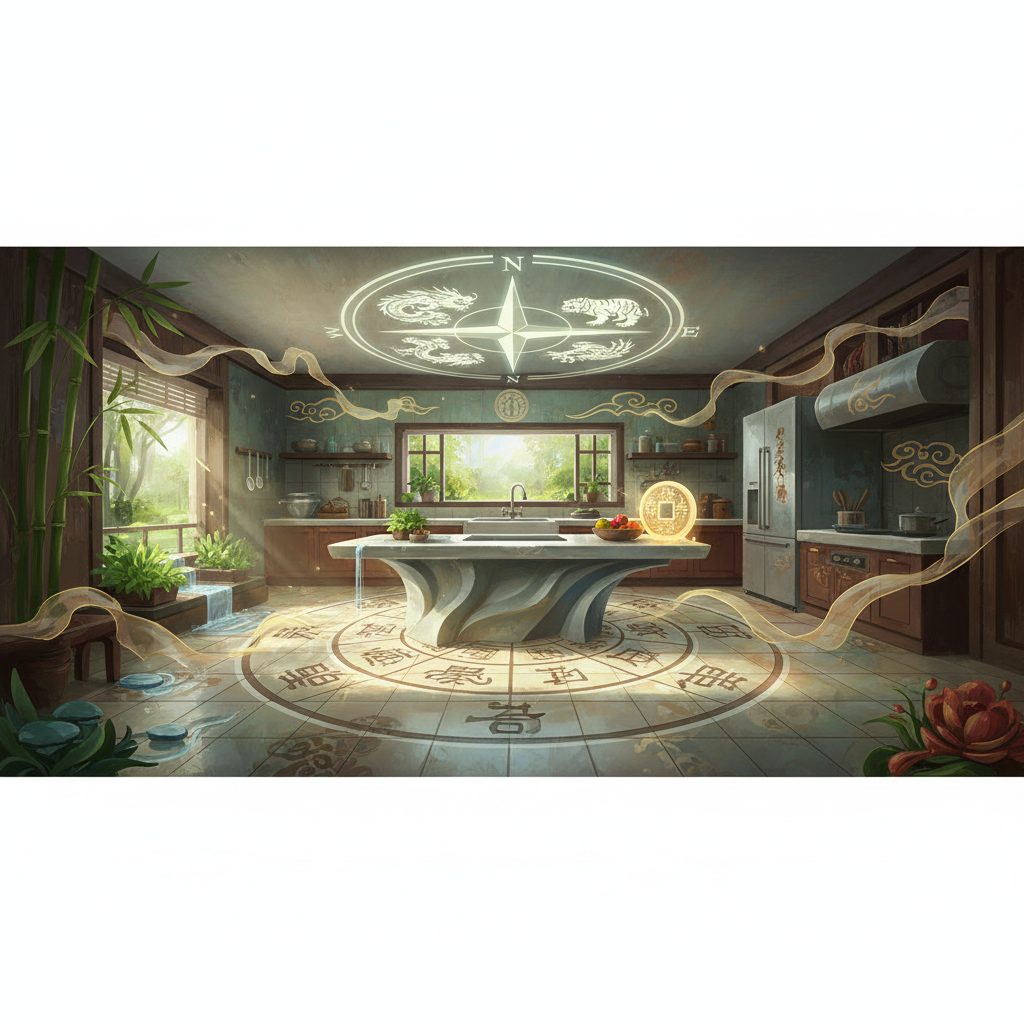
Understanding the Essence of Feng Shui
Feng Shui, an ancient Chinese practice rooted in the understanding of energy flow or "Chi," is a vital aspect of architecture, design, and lifestyle. Literally translating to "wind-water," Feng Shui emphasizes the importance of environmental harmony. Its historical origins date back over 3,000 years to the Han Dynasty, where it was initially employed for tomb placement and later adapted for residential and commercial spaces. Today, Feng Shui principles are applied in interior design, particularly in kitchens, which hold significant importance as the heart of the home, where nourishment and family gatherings occur.
The Kitchen's Symbolism in Feng Shui
In Chinese metaphysics, the kitchen symbolizes prosperity and sustenance. Its layout and energy directly affect not only the culinary experience but also the overall family dynamic and fortune. According to Feng Shui, the kitchen should ideally foster a warm and welcoming atmosphere, promoting positivity and abundance. Key elements such as the stove, which is considered the "heart" of the kitchen, need to be positioned correctly to ensure balance.
In many traditions, it's recommended that the stove should not face the kitchen entrance, as this orientation can create a loss of energy. Instead, an optimal placement allows the cook to see the entrance while cooking, which enhances a sense of security and control.
The I Ching: A Tool for Culinary Decision-Making
The I Ching, or "Book of Changes," is an ancient divination text integral to Chinese metaphysics. It functions as a guide for ethical decision-making and understanding life’s fluctuations. The relationship between I Ching and Feng Shui is profound, as both sets of principles revolve around the balance of energies.
In the kitchen context, you can consult the I Ching for insights about food choices or cooking methods that align with current energies. For example, you might use I Ching principles to choose meals that resonate with specific themes, such as nourishment or health, thereby creating more intentional dining experiences.
Practical Feng Shui Tips for Your Kitchen Space
Creating a harmonious kitchen involves several practical Feng Shui tips beyond basic setup. Here’s how you can ensure your culinary space is not only functional but also energetically aligned:
1. Clutter-Free Zone
A cluttered kitchen can disrupt the flow of Chi, making it essential to maintain tidiness. Keep counters clear and only display items that inspire joy and creativity.
2. Appropriate Colors
Incorporating the right colors can influence the energy of your kitchen. Bright colors like yellow embody warmth and creativity, while earthy tones foster stability. Consider painting or using decor that reflects these principles.
3. Elemental Balance
Incorporate the five elements—wood, fire, earth, metal, and water—into your design. For example, wooden cabinets depict the wood element, while metallic appliances illustrate metal. This balance creates a harmonious environment.
4. Optimize Light and Airflow
Proper lighting and ventilation are essential for maintaining good energy. Natural light promotes positive energy, while adequate ventilation ensures the air remains fresh and clean.
5. Plants as Energy Boosters
Introducing indoor plants in the kitchen can enhance vitality and connection to nature. Herbs are an excellent botanical choice, as they provide flavor and health benefits while contributing to the kitchen’s energy.
Cultural Significance of Feng Shui in Modern Kitchens
In recent years, the cultural significance of Feng Shui has gained international recognition. Modern kitchens increasingly showcase Feng Shui principles, even among individuals unfamiliar with its rich heritage. This approach transcends mere aesthetics; it prioritizes emotional well-being and stability for families. It’s common to find Feng Shui practitioners offering advice on kitchen layout and design as part of holistic living trends.
Interestingly, restaurants and commercial kitchens have also adopted these principles. Chefs now consider Feng Shui when designing their kitchen spaces to ensure that the flow of energy supports both productivity and creativity.
Conclusion: Turning Your Kitchen into a Sanctuary
The intersection of Feng Shui and the I Ching offers a profound approach to cultivating a nurturing kitchen environment. By applying the principles of energy flow, elemental balance, and conscious decision-making, you can transform your kitchen into a sanctuary that not only enhances culinary experiences but also enriches your family's life. Embracing these ancient traditions allows us to connect with our heritage while fostering a more harmonious and satisfying living space.