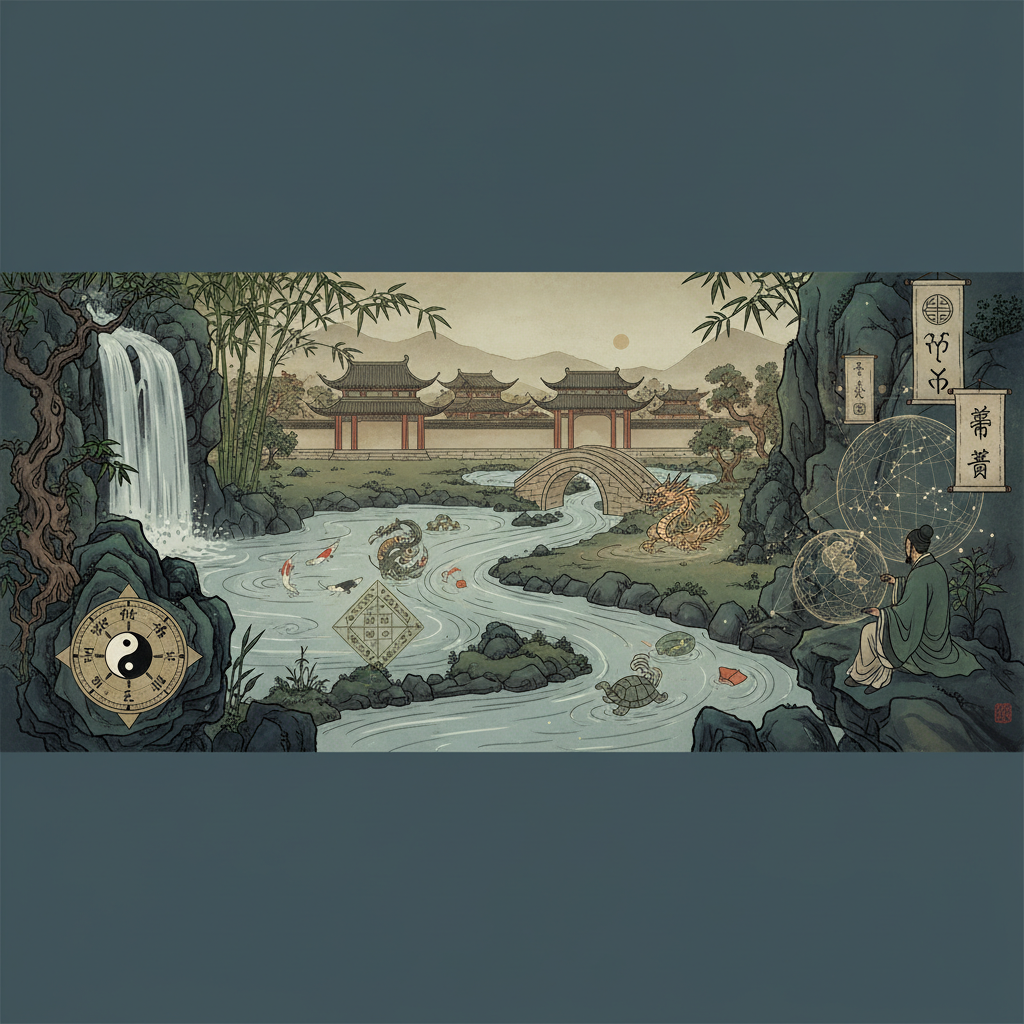
The Historical Roots of Feng Shui
Feng Shui, an ancient Chinese practice, has its origins dating back over 3,000 years. Originally influenced by geography and cosmology, it evolved to incorporate elements of Chinese metaphysics, geomancy, and the I Ching—an ancient divination text. This harmonious alignment focuses on the interaction between individuals and their environment, shaping how they live, work, and experience life. The earliest practitioners sought to enhance their surroundings to ensure prosperity, health, and well-being, recognizing the vital role that natural elements, especially water, play in achieving balance.
The Cultural Significance of Water in Feng Shui
Water is considered a crucial element in Feng Shui, representing wealth, abundance, and prosperity. The Chinese character for water (水) is often associated with fluidity and movement, essential qualities for generating energy, or "Qi." A well-placed water feature in one's environment—be it a pond, fountain, or aquarium—can attract positive energy, ushering in prosperity and enhancing overall harmony.
Historically, water was pivotal in agriculture and city planning in ancient China, dictating trade routes and settlement patterns. Consequently, its significance in Feng Shui reflects the broader cultural understanding of nature's power to influence human life, underscoring the belief that harmony with the environment is essential for success.
The Role of Water Features in Feng Shui Practice
In Feng Shui practice, the placement of water features must be done with intention. It is essential to consider the direction, type, and relationship of water with other elements. For example, a flowing fountain facing the front door invites wealth and prosperity, while stagnant water can gather negative energy, leading to misfortune and illness.
Moreover, different types of water features hold unique meanings and benefits. An indoor aquarium, for instance, can enhance tranquility and promote family harmony when properly cared for. Outdoor features, such as ponds or water gardens, may symbolize abundance and fertility, especially when plants and koi fish are included to reinforce the life-giving properties of water.
Exploring I Ching and Its Influence on Feng Shui
The I Ching, also known as the Book of Changes, is a foundational text in Chinese metaphysics and divination. It consists of a collection of hexagrams that serve as symbols of yin and yang, providing insights into the dynamics of change. The I Ching's wisdom informs many aspects of Feng Shui, including the understanding of water's role in one’s environment and life.
Utilizing the I Ching in Feng Shui practice often involves divining energies in relation to specific situations. For example, when seeking guidance on where to place a water feature, one might consult the I Ching to determine auspicious directions or timings, aligning actions with the natural flow of Qi. This incorporation reveals an intricate tapestry of connection, where divination and environmental harmony come together to inform personal spaces.
Geomancy: The Spiritual Layer of Space and Water
Geomancy, or "divinatory geomancy," plays a key role in Feng Shui, deeply interconnected with the positioning of water features. This ancient practice interprets patterns in the land to distinguish energy flow, assessing how topography affects environmental and human interactions. Experts analyze the site’s energy lines—often referred to as ley lines—understanding how these can influence the effectiveness of water elements.
Creating a successful Feng Shui environment requires balancing these geographical energies while incorporating water features. For instance, a water fountain should ideally be placed along an energy line to amplify its positive effects. Skilled geomancers can identify these energy pathways, ensuring that water features not only embellish the space but also optimize energy flows.
Conclusion: The Harmonizing Power of Water in Feng Shui
The integration of water features within Feng Shui practice exemplifies a profound understanding of the interconnectedness of nature, spirituality, and human experience. By embracing principles from the I Ching and geomancy, individuals can create spaces that promote prosperity, vitality, and tranquility.
As we engage with these ancient practices in a modern context, the lessons of Feng Shui remain incredibly relevant. Water, in all its forms, serves as a reminder of the importance of balance and flows in our lives, inspiring us to embrace the ebb and flow of our own environments. Whether it’s a small tabletop fountain or a grand koi pond, every water feature holds the potential to transform your space, inviting in the rich, restorative energies that Feng Shui promises.