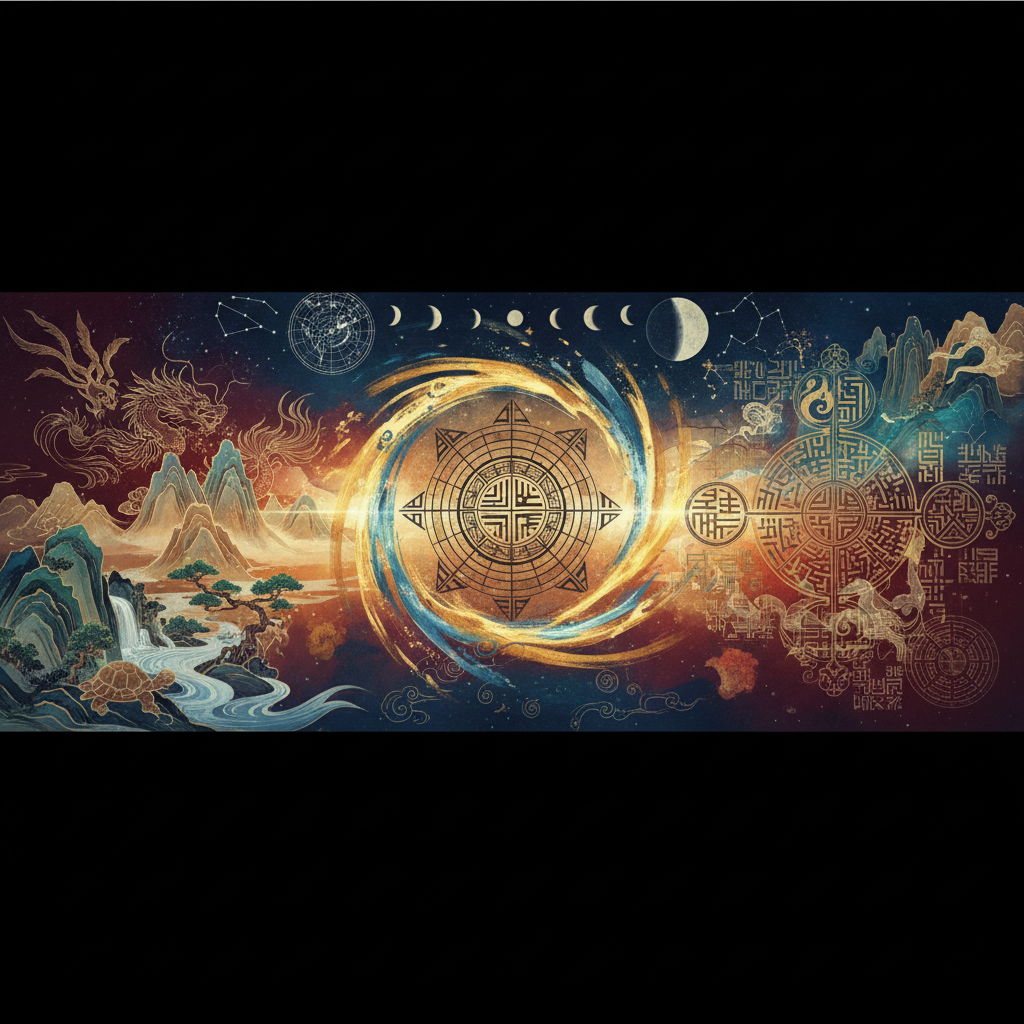
Understanding the Foundations of Feng Shui and Chinese Metaphysics
Feng Shui, which translates to "wind and water," is an ancient Chinese practice focused on creating harmonious environments by understanding the flow of energy, or "qi" (pronounced "chee"). It is intricately tied to Chinese metaphysics, a broad category that includes various disciplines such as I Ching, geomancy, and divination. These fields have significantly shaped Chinese culture and philosophy over thousands of years, with roots tracing back to at least 3000 BCE. They offer a unique lens through which we can examine our interaction with space and the universe.
The Historical Context of Feng Shui and I Ching
Feng Shui's development has deep historical roots, emerging during the Han Dynasty (206 BCE–220 CE) alongside the I Ching, one of China's oldest texts. The I Ching, or "Book of Changes," is more than just a divination manual; it encompasses philosophical ideas that have influenced various aspects of Chinese culture, including governance, ethics, and, of course, Feng Shui. The text uses a system of sixty-four hexagrams, derived from combinations of broken and unbroken lines, to provide insights into the changing dynamics of life. This framework mirrors the principles of Feng Shui, where the arrangement of space can influence the flow of barriers and pathways of energy.
The Cultural Significance of Chinese Metaphysics
The disciplines of Feng Shui and I Ching are not mere practices but integral parts of Chinese identity and spirituality. Both practices emphasize harmony with nature, the importance of balance, and awareness of the unseen forces that shape our lives. Historically, emperors consulted Feng Shui experts to select auspicious locations for palaces and tombs, believing that good alignment with natural elements could ensure prosperity and luck. This belief system highlights the cultural importance of these practices, marking them not only as personal tools but also as significant rites of state.
The Role of Geomancy in Feng Shui Practices
Geomancy, often referred to as "divination by means of the earth," plays a crucial role in Feng Shui. It involves interpreting markings on the ground or patterns formed by tossing objects to gain insight into the earth's energies. In ancient China, geomancers utilized geomantic techniques to inform decision-making regarding land use, construction, and urban planning. The practice is integral to Feng Shui, where the orientation of buildings, the placement of doors, windows, and furniture, and the overall spatial layout are selected based on geomantic assessments. This connection reinforces the belief that our environment profoundly affects our life experiences.
The Interplay of Divination and Feng Shui in Daily Life
Divination through the I Ching and other methods extends beyond understanding one's fate. While the I Ching uses hexagrams to interpret life's challenges and opportunities, Feng Shui provides practical guidelines for structuring one's environment to promote positive outcomes. Together, these practices enable individuals to cultivate a lifestyle in harmony with natural cycles, enhancing their ability to navigate through ups and downs. Many practitioners integrate the insights gained from I Ching divination with Feng Shui adjustments in their homes or offices, creating a holistic approach that aligns external conditions with internal mindsets.
Conclusions: Embracing Feng Shui, I Ching, and Chinese Metaphysics Today
As we navigate the complexities of modern life, the principles of Feng Shui, I Ching, and Chinese metaphysics remain relevant. They encourage individuals to cultivate not only physical surroundings that nurture well-being but also a deeper understanding of their life paths and decisions. In essence, these ancient practices offer a roadmap for contemporary living, guiding us toward harmonious existence with ourselves and our environment. By engaging with these timeless philosophies, we can enrich our lives, making meaningful connections that span the ages.
Whether you are seeking balance in your environment, intuitive guidance from the I Ching, or simply a greater understanding of the world around you, exploring the intricate pathways of Feng Shui and Chinese metaphysics can lead to profound transformations and a deeper appreciation for life.