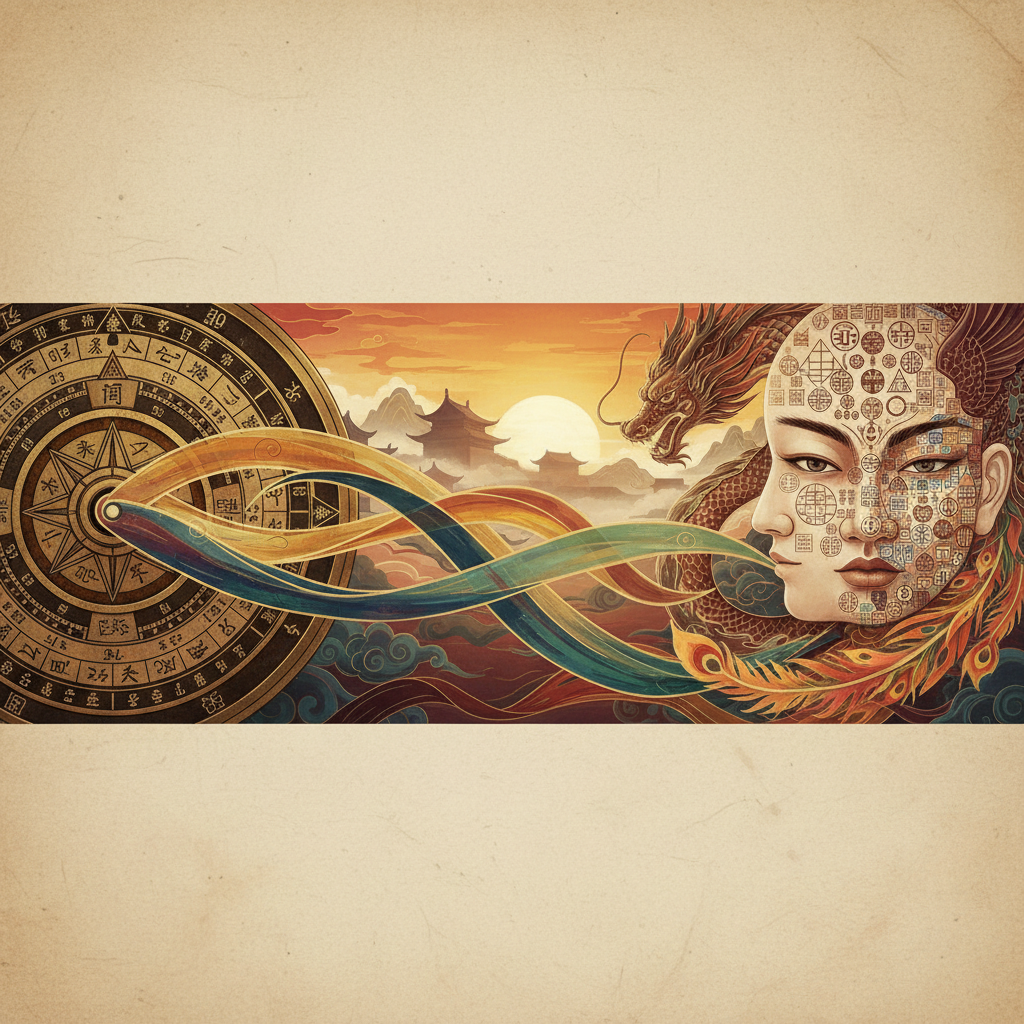
Unlocking the Secrets of Feng Shui and I Ching
Feng Shui and the I Ching are not only cornerstones of Chinese metaphysics but are also deeply interwoven with cultural practices such as face reading. These ancient traditions focus on the harmonious flow of energies and the interpretation of signs, serving as tools for guidance and understanding. While face reading specifically looks at physical traits to uncover personality traits and fates, Feng Shui and the I Ching provide a broader metaphysical context that enriches this practice.
A Brief Historical Overview
Feng Shui, literally meaning "wind and water," dates back thousands of years to the Zhou Dynasty, practiced by emperors and commoners alike to foster harmony with the natural environment. Over time, it became a holistic system focusing on the unseen energies that affect our lives. Similarly, the I Ching, one of the oldest divination texts in the world, is believed to have originated as far back as the Western Zhou period (1046-771 BCE). It serves as a guide for understanding change through its hexagrams, which offer insights into the dynamics of life situations.
Face reading itself can be traced back to ancient Chinese medicine, where practitioners examined facial features to diagnose health and emotional states. As these traditions evolved, they interconnected, creating a rich tapestry of understanding that combines geomancy, divination, and human observation into a comprehensive approach for interpreting life's complexities.
The Cultural Significance of Feng Shui
Feng Shui is not merely a practice but a cultural mindset that emphasizes the importance of environment in shaping human experiences. The placement of objects, colors, and even the orientation of buildings can significantly impact energy flow, known as "Chi." For example, in traditional Chinese architecture, homes were built with deliberate planning to capture favorable energy. This meticulous attention extends into everyday life, where individuals curate their surroundings to promote prosperity, health, and happiness.
Through face reading, practitioners can blend Feng Shui principles with physical traits, offering insights into a person's character and destiny. The configuration of features can reflect how someone might interact with their environment, underscoring the belief that personal energies resonate with their surroundings. Thus, the practice becomes not only about interpreting facial characteristics but also about recognizing their environmental implications.
I Ching as a Tool for Divination
The I Ching operates on the principle of change, symbolized by its 64 hexagrams formed by combinations of broken and unbroken lines. Each hexagram represents a distinct scenario or set of conditions. By consulting the I Ching, individuals seek clarity on pressing questions or dilemmas they face. The text addresses life’s cyclical patterns, suggesting approaches to navigate challenges and embrace transformations.
When paired with face reading, insights drawn from the I Ching engage deeper dimensions of understanding—such as how a person’s external features may juxtapose their internal experiences or current life paths. The fusion enriches the reading by aligning outer characteristics with inner wisdom derived from the I Ching.
Geomancy: The Art of Divination Through Earth Patterns
Geomancy, often tied to Feng Shui, employs the Earth’s patterns and energies to discern future events or outcomes. This method involves interpreting signs that emerge from the land, combined with spatial awareness to enhance decision-making processes. Traditionally, geomancers used sand or soil to create divinatory figures, offering pathways to understanding fate and fortune.
When practicing face reading within the geomantic context, one learns to appreciate how even small changes in facial features or expressions can be influenced by broader environmental conditions. This linkage reinforces the principle that our personal energies not only reflect our internal state but are also shaped by the energies around us.
The Interplay of Technique and Intuition
While techniques in face reading focus on cautious observation and trained expertise, the practitioners are also guided by intuitive insight shaped through their understanding of Feng Shui, I Ching, and geomancy. Successful readings require a blend of analytical skills and deep cultural intuition honed over years of practice.
As society embraces the wisdom of these ancient practices today, there’s a growing interest in blending traditional insights with modern applications, especially through psychological and emotional lenses. While rooted in the past, Feng Shui, I Ching, and face reading are adapting to contemporary challenges, promoting a holistic approach that honors personal and environmental relationships.
Conclusion: A Holistic Approach to Understanding
By appreciating the intersections of Feng Shui, I Ching, and face reading, individuals can unlock deeper layers of understanding about themselves and their environments. These practices engage with the metaphysical, emphasizing the balance of energies that shape our lived experiences. In today's fast-paced world, these ancient insights can provide unique perspectives and grounded approaches to personal and communal harmony. Embracing such traditions enriches not only personal experiences but also elevates cultural understanding, fostering a collective awareness of our interconnected fates.